Wednesday, 18 July 2012

Casting & Styling

[As we all worked together on research, this blog post originally came from Lily's blog - as this was the blog we used to output all things relevant. This is a repost of what we ALL did]


After our second tutorial with sam we decided that we needed to finalise who we would use to model. We did have a model lined up but it was a shady area on whether she would be reliable and so we began looking again. We found several people around halls and uni who all had characteristics that fitted our idea:


We then stumbled across a girl who we thought would be perfect and who we were already in contact with. So we asked her and she agreed. Her friend is also a stylist who's work we have seen before and we think would be a good idea to get involved so that our shoot fulfils the fashion image brief well. We have asked both girls to come down soon so that we can do a charactarisation and styling shoot and brief the two on our project.


There are a few others that live closer by who we can also use to fall back on incase of any issues that occur.


We have decided to that we would like to collaborate with other subjects at uni as there are so many resources available. We have found a designer who has created a dress in the style of Rick Owens (a designer we were looking into for inspiration). We will propse this idea to our stylist too and see how she feels we can combine this with other fashion elements to get the look we are aiming for.
We are also planning on finding student who work in jewellry design as this is a very important part of our styling also. We were thinking of a type of head dress/crown that suggests power and status but that also looks home made as if our character is the only one who feels these things about herself. We have met a few people that would be interested but again we will also run these ideas by our stylist so we achieve the best look possible.

Fashion/Constructed Image Project Presentation

This is our power point presentation which we had to prepare for our initial tutorial:


BABA YAGA


These are the notes from the presentation that explain our slide show a bit better:


SLIDE 1:
 We started by looking at folklore in general and different things to it. Through researching the genre, we found many things associated to it. We looked into Greek mythology, Children's fables, and folk festival stories. From the definition of Folklore, we discovered that people rely on folklore to communicate stories to people which could be compared to the media today as they may be seen to influence people by spreading information.


SLIDE 2:
We then created a brainstorm of our Initial ideas:
Inspired by greek mythology
Chronicles of Narnia – childlike creation of a magical world, good and evil characters
Lord of the Rings
Franklyn (film)
Hansel and Gretel
Wizard of Oz
Witches throughout history and popular culture
Modern Paganism
Stigma attached to witchcraft through Medieval ages, Salem Witch Trials
SLIDE 3:
As a group, we chose folklore as our genre of focus, we were most intrigued by therussian folklore of Baba Yaga, a witch who has had many stories written about her from different cultures.


SLIDE 5:
Through looking at all of the cultures, we took some key themes of the many written stories to see where she is with her own morals. We found that she was spiteful to those who cast her out because of how different she was to the rest of society. The other theme we found cropping up was the fact she envied people's youth. In the story, she would drink the Blue Rose tea to sustain eternal youthfulness.


SLIDE 6:
When researching the character's background, you can find artists impressions based upon the original tale. These two images in particular set the style of story. Particularly, the one on the left gives us a colour palette to keep in mind. The purpose of the drawings is to evoke fear within the viewer, because of the how the tale goes. The aspects that achieve this could be the eyes, necklace, and skulls. This imagery we will incorporate.


SLIDE 7:
After picking our chosen folklore Baba Yaga, who is a witch, we looked at other witches to find and compare similarities between them. Even in Stardust (top right), she uses her dark magic to ultimately bring her back into youth. This seems to be a recurring theme among these characters.


SLIDE 9:
We want to modernize the story and make social comments on modern beauty and what effects it has on both us as individuals and the fashion industry.
There is always a constant desire to be young from people today. As our image is ultimately going to be fashion related, we have to be able to translate that within what we create as our final photograph.


SLIDE 10:
We drew most of our themes from symbolism – following the storyline whilst picking up on the morals behind the idea, including cultural references relating to the story itself and its origins, countries, regions etc.
For example the evil eye symbol which shows her evil characteristics. The evil eye may also show her vulnerability and fear – she may be scared because of her isolation.
We’ll also include candles/crystals and other superstitious items to relate to the folklore aspects and the pagan-type lifestyle
Photograph of her before – younger, happier, before she was aware of modern ideals of beauty, age and awareness outcast her and she isolated herself.


SLIDE 11:
As we look to achieve a style, we could be influenced by the photographers of these images; Paolo Roversi, Ellen Rogers, Sarah Moon. Other photographers such as AlisonScarpulla and David Hamilton will aid us in our styling, as all their models look slightly out of focus, and their faces are concealed, to create mystery. His photos also frame the model to create focus on the characterization of the subject.


SLIDE 12:
In the story of Baba Yaga, it talks a lot about her home as it's a significant part of the story. It helps us understand her personality by showing us her belongings. These two images above are from the Romanian gypsy caravans; we thought these were quite relevant because they are only built for one person – this is referenced in the film 'Stardust.' Modern fashion is influenced by past cultures and lifestyles, we recently saw the Bohemian trend, which borrowed heavily from the Romanian gypsies.


SLIDE 13:
In the interior, we wanted to bring external elements within her home, to help us aid in presenting her character, but to also show she is at one with nature, as she uses the forest to conceal herself. The photo top left is a similar aesthetic that we will strive for as it has fragmented elements among it.


SLIDE 14:
Joshua Hoffine – camera position – made for audiences perspective, elevated.
Tim Walker – photograph made by styling of model and set, alters viewers perception of scaling
Model should be looking directly at the camera, direct connection to the viewer, can understand the emotional conflict.


SLIDE 16:
Refined props, not overwhelming to the viewer, just enough to keep it relevant and give enough information about the character that we communicate her properly.
The combination of indoor and outdoor will again bring this 'oneness' of her home and nature.
Symbolic personal items, such as the blue rose (the type of tea she's addicted to), will be heavily incorporated to present her character.


SLIDE 17:
These images are stylistically quite relevant to our aesthetic, they also have a relationship with nature but a darker feel. There's an olden, worn kind of impression. Pagan and folklore references are in the styling, drapery and natural links within fabric.


SLIDE 18:
Casting – model with quite an angular face, balance between strained and gaunt and fragile and delicate. Suggestion of evil – emotional angst but a sorrow and desperation behind it. Combination of these two models and represent both sides.
Her desire to be more beautiful than any one – yearning for the unattainable
 Heinrich von Ofterdingen, the 1802 unfinished novel by German romanticist Novalis' and Tennessee Williams 1944 book The Glass Menagerie
A Clone – unreal, altered self so much in the pursuit of beauty that she’s hardly who she was before.
She’s a bit self indulgent, vanity has overtaken her lifestyle but she exists to constantly make herself even more beautiful, endless routine


SLIDE 19:
Our sophistication is definitely not shown through this image as this is just a quick mock-up to give a better visual idea of our aim towards the final. Our final will hopefully present a much more professional look obviously, but this is just to aid your imagination with the research presented previously.

Fashion/Constructed Image Project Idea

[As we all worked together on research, this blog post originally came from Lily's blog - as this was the blog we used to output all things relevant. This is a repost of what we ALL did]


For this project our group chose to find an old folk tale that we could take and reinterpret in a fashion and current style. We chose the story of Baba Yaga - on old Slavic story, originating in Russia but has been passed on to different generations and cultures, each with different variations.

Baba Yaga is a witch that lives in the woods in a house built on the top of a giant chicken foot. In some variations of the story it is told that she kidnaps children and then eats them. Others say she flies around in a giant pestle and mortar causing havoc to villages surrounding the wood. In most stories it explains how she ages by one year every time someone asks her a question but then this process is reversed if she drink tea with blue roses in it.  It also states that she is the communicator between the real world and the world of the dead.

Our concept for this project will be a modernized version of this story, picking out a specific element that can be translated through issues within society that we see today. Our image will talk about women's obsession with beauty and the quest for youth and how some women hide away from society if they do not think they fulfill the media's ideals about what it is to look young. This relates to the story as it talks about Baba Yaga's isolation and spite towards others around her and what she undergoes in order to recapture her youth. 

Project schedule and priorities within the group:

Tuesday, 21 February 2012

"Waste" Commission Ideas

A couple of things have sprung into my head whilst I have been planning my Commission unit work.

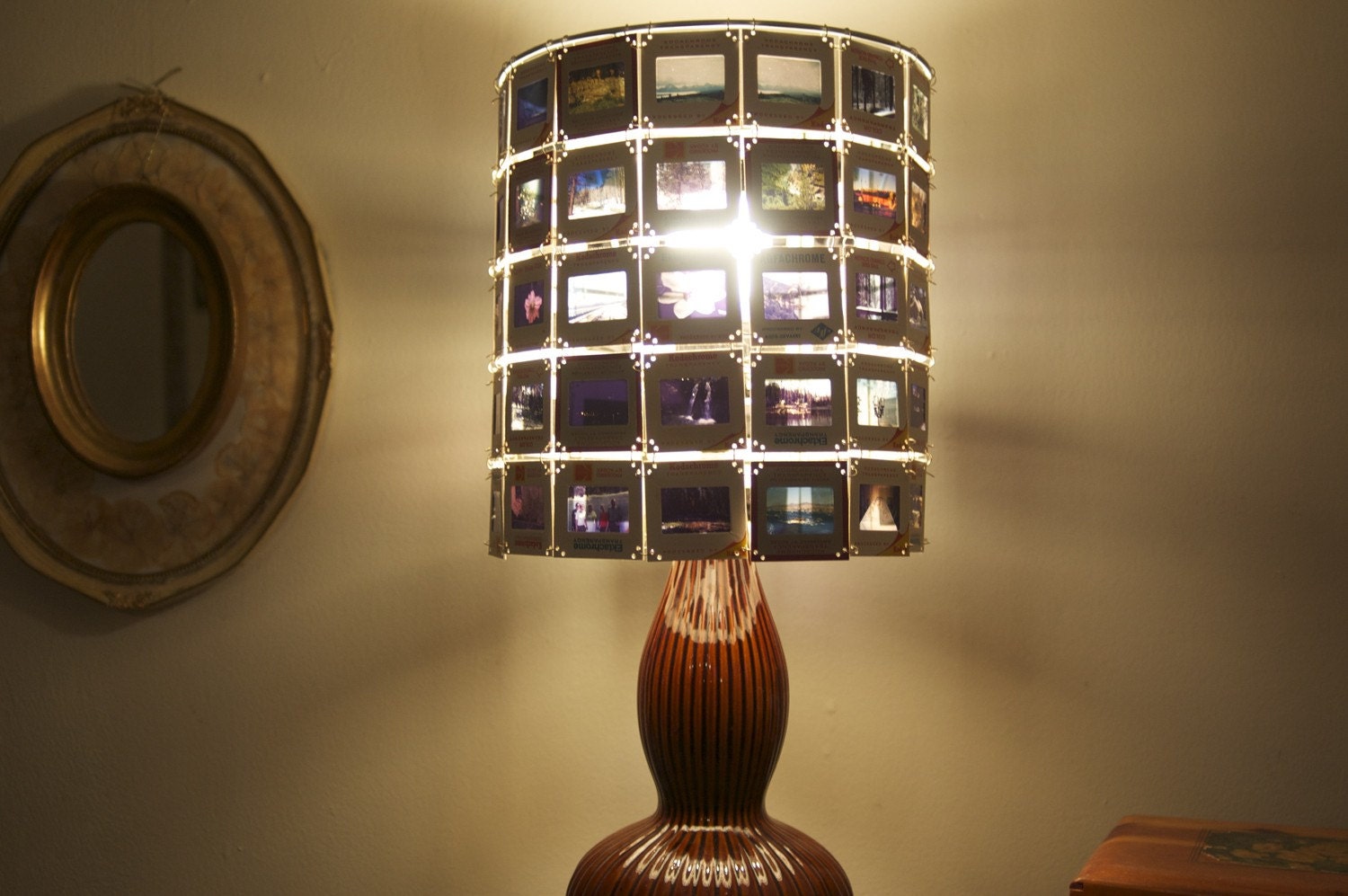
I'd like to involve positive photographic slides as the main representation of recycled/un-wasted photography. The content featured within these slides will be examples of Photography taken in and around the local area of Medway during the timespan of Kodachrome (1950's-2010). The slides were taken by various members of my family during this time and have since been passed down to me because nobody wanted them. They are essentially photographic waste which I wish to recycle.

In order to photograph them effectively, the slides themselves will have to be lit appropriately without compromising the overall effect of an image. This will probably best be done in a studio environment so I am able to control the light as accurately as possible. To illuminate the slides I plan to experiment with various types of lighting, but I hope to be able to use backlighting as the "key ingredient" of the shoot, but this would be problematic in terms of flare etc. But then that is the point of testing and experimenting for the shoot beforehand.


These are various ways in which I can photograph the slides, including physically creating a "lamp shade". I particularly like the idea of creating some form of still life using a large illuminated surface and placing the slides on this and using the light from underneath. The soft, diffused nature of the light being used in this way will hopefully negate any flare and exposure problems, but the opaque surfaces of the slides may become silhouetted. I will therefore have to think about employing some form of fill light from above, but not enough as to ruin the images inside the slides.

I'm sure backlighting will be the best way to do this, so my next post will be about lighting experimentation. Laterz y'all!


Sunday, 19 February 2012

What is Kodachrome?

The last few blog posts have referenced a type of photographic process called Kodachrome. So if you're wondering what it is then hopefully this post will explain it in a little more detail.


"Kodachrome is a type of color reversal film introduced by Eastman Kodak in 1935. It was one of the first successful colour materials and was used for both cinematography and stills photography. Because of its complex processing requirements, the film was sold process-paid until 1954 in the United States where a legal ruling prohibited this. Elsewhere, this arrangement continued. Kodachrome was the subject of a Paul Simon song and a US state park was named after it. For many years it was used for professional color photography, especially for images intended for publication in print media. Because of the uptake of alternative photographic materials, its complex processing and the widespread transition to digital photography, Kodachrome lost its market share, its manufacture was discontinued in 2009 and film processing ended in 2010."

Taken from: http://en.wikipedia.org/wiki/Kodachrome

Kodachrome is pretty much a way of making photography from before my time, and I am sad that I will never get to truly experience making and taking photographs using this prestigious process. But alas, sometimes things have to come to an end - I'm one of the "digital generation" and will probably end up using this as my main medium, but we should never forget our roots and our history.


Thousands of Kodachrome positive slides have been produced over the years and each one has a little bit of history hidden within it. I would love to create something that is able to tap into these memories and express them a little better than have been in the past.